
The Click of the Ruby Slippers
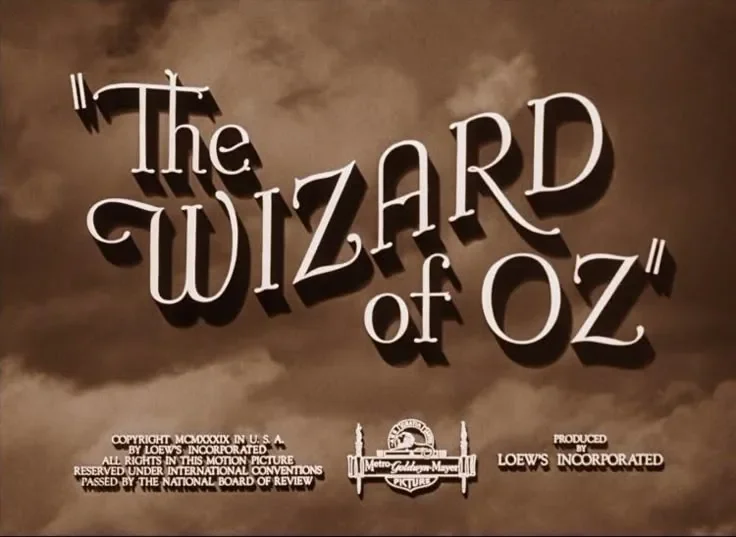
The title card from The Wizard of Oz.
Formal and aesthetics within a film are some of the most beautiful and interesting aspects of the piece of art that is film itself. Within the movie The Wizard of Oz, the mix of sound effects, songs, and dialogue further the magical impact within the world of Oz in the film. By examining the use of various diegetic and non-diegetic sounds in the movie The Wizard of Oz, we can see just how these elements reflect the characters' environment and inner thoughts throughout their journey, while also advancing the narrative of the story. Specifically, by hearing these effects, there is a great difference between the world that we are shown at the beginning of the movie, Kansas, and the fantastic and magical world of Oz. Rather than completely focusing on the physical difference, we can see how the use of sound can impact and enhance the entirety of a film such as this one.
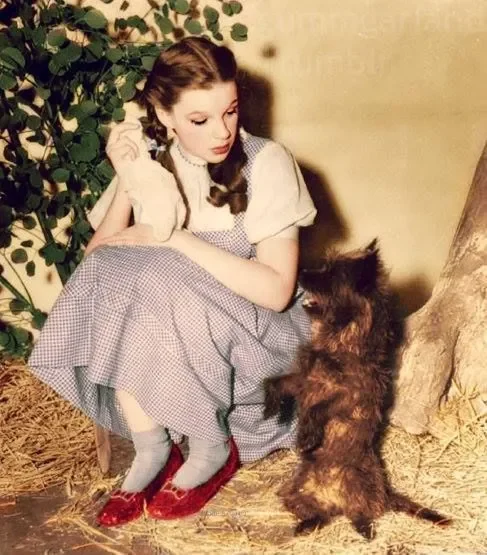
The Wizard of Oz is a story about growth, perseverance, and realization. In many aspects, it is one of the truest films, as each character represents a certain aspect of the journey our main character, Dorothy, takes. The Wizard of Oz starts with our main character, Dorothy, being taken away by a tornado in Kansas to drop her off in the Land of Oz. Once she arrives in this grand and magical world, Oz, she is told to follow a yellow brick road to Emerald City. This is in order to find a great wizard named Oz who has the power to send her back home. Throughout her very long journey down this yellow brick road, she is met with many characters who seem to need her help or desire something in order to feel fulfilled. First, we meet the Scarecrow, who longs for a brain; next, the Tin Man, who feels incomplete without a heart; and finally, the Cowardly Lion, who seeks the courage to face his fears. Once creating a beautiful friendship, the four characters are able to face what is waiting for them. The Wicked Witch of the West is the main antagonist in this movie, as her motive is wanting Dorothy's ruby shoes, which hold great power in the land of Oz. Throughout this story we are given beautiful ideas of love and friendship, all being emphasized by the use of sound and song. Towards the end of the movie, the audience is given insight that the things we often desire can be found within us, rather than having to search all of the land or find a magical answer to why. The main protagonist, Dorothy also realizes this solution, as she has the power to return home whenever she wastes throughout the entire movie. This is when we are given the CLICK CLICK CLICK of those ruby red slippers and the repetition of those very famous lines “There's no place like home” that send Dorothy right back to Kansas with this new knowledge to fulfill her life.
Before being able to understand just how the sound and use of music are able to display emotional impact within this film, we must be able to break down this film into its finest elements.” We must truly be able to treat sound and image as equal partners,” as said by Maarten Coegnarts, author of “Embodying the Audiovisual Scene: A Container Model for Analyzing Sound in Film.” Within the article, it gets touched on just how important the use of sound is, in relation to the image of a film, as in modern ages one rarely exists without the other. With the use of sound, it truly can emphasize the feelings, mood, and overall tone of each scene in a film. He brings to light Edward Branigan’s idea of how sound and image are able to function as partners and further mentions sound as a ‘spatial phenomenon’ (Branigan, 2006). Along with this, Branigan also brings up the point that there is a privilege given to vision when trying to understand film (Coegnarts, 2023). When applying these ideas to the film The Wizard of Oz, it is notably very hard to have the image and the sound not work hand-in-hand. Along with this we also have to give credit to creating new and imaginative sounds, as they were creating both music and effects for elements not found in our physical world. Therefore, so many new and imaginative elements had to be put into work to give the film certain moods. Ultimately, by pairing both sound and image the way this film does, it creates an emotional and immersive experience for the viewer.
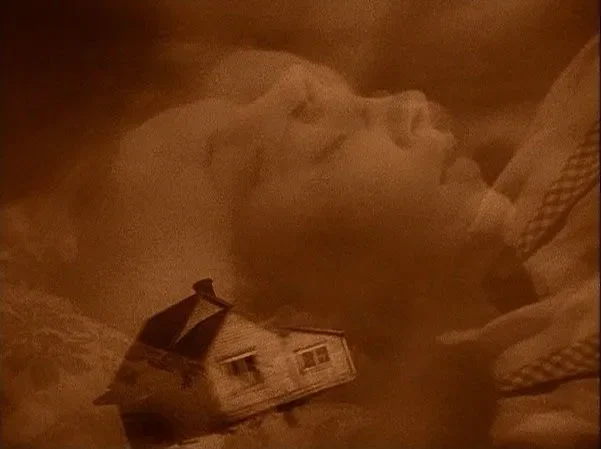
The cyclone scene is the immediate scene that comes to mind when thinking about diegetic and non-diegetic elements for The Wizard of Oz. The orchestra in the back is truly able to convey the mood of Dorothy as she returns home and the cyclone is approaching. The music starts very high-paced and fast, then moves into a magical and slow tune once she is inside the bedroom. As the music picks up, we get a playful tone as characters from her life appear outside the window, over and over until the Wicked Witch appears. Once we see the Wicked Witch, the mood immediately switches back to fast-paced and suspenseful due to the nature of the sound in the scene. In order to understand the importance of sound in a scene, we must watch the scene with the lack of sound. Once this cyclone scene has been put in front of us without sound it becomes very evident what is happening, but certain mood cues are not there. Without the playful tone of the music, the audience might be left to wonder exactly what Dorothy is feeling or thinking at that moment. It gives us great insight into our main character's head and is able to tell us information about the emotional level of our main character in general. While the visual elements do give us a lot of information, that element is now greatly emphasized with the use of the non-diegetic element which is the musical score in the background.
The other scene that comes to mind when thinking of just how sound can emphasize a movie such as this one is the scene where Dorothy and Scarecrow find the Tin Man and bring him back from being rusted.
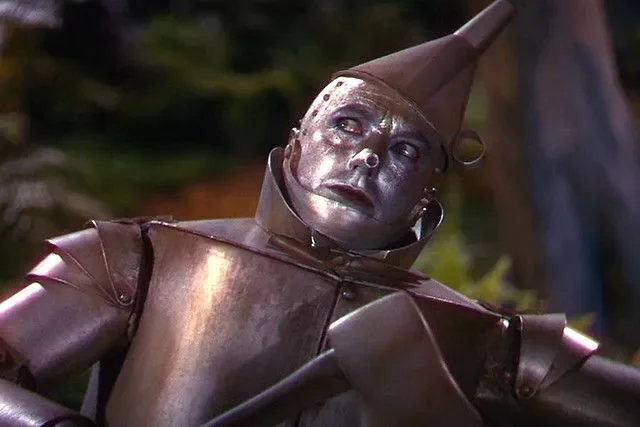
This is one of the best examples in the movie of diegetic elements that show what a character is feeling. In this scene, both Dorothy and the scarecrow find the Tin Man frozen in the forest when following the yellow brick road, rusting completely as he had been for years. From hearing a faint noise form him, they discover that he is unable to move, which leads them to use an oilcan that is nearby to lubricate his joints for mobility. Once the Tin Man is able to move, he can tell both Dorothy and the scarecrow how much he would like a heart. When telling them this, he asks Dorothy to knock on his chest, to which the emptiness of his chest is represented by the echo of the knock. From here the tin man breaks into a song about longing for a heart, in which every time he moves, the audience is able to hear a metallic creek that accompanies the visual element of the tin man trying to move and wanting to move. This blend of sound and visual elements cannot only emphasize the tin man’s mechanical nature, but it is also able to showcase his emotional yearning for something that he feels he is missing. It furthers just how sound is able to create an immersive connection between an audience and a character's struggle within a film.
We can also touch on the contrast between Kansas's dull and muted soundscape compared to the brightness and energy of the music of the Emerald city.
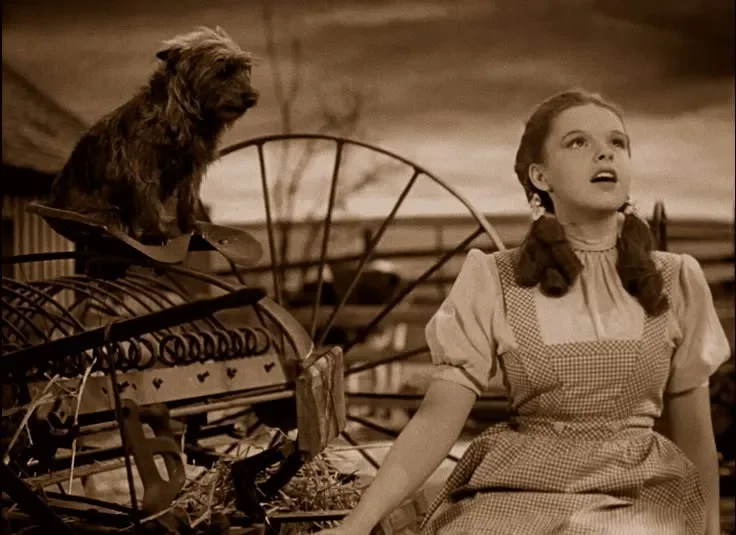
The muted images and soundscape of Kansas.
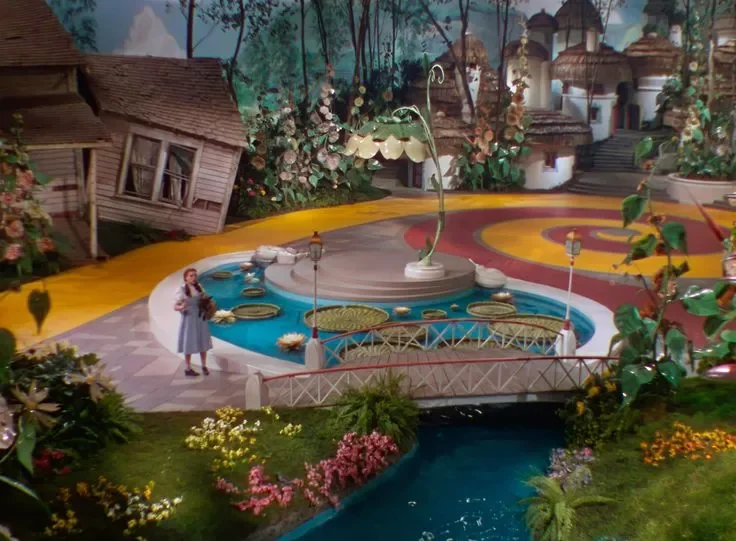
The technicolor and liveliness of the emerald city.
It is truly able to emphasize the nature of Dorothy's journey to get back home while learning many lessons. This specific shift is not only able to highlight the true wonders of Oz but is able to accent the emotional feelings that each character has and highlight their growth throughout the film. The very noticeable difference between these landscapes, both visually, and sound-wise, are able to give us insight into Dorothy's journey from longing to be somewhere else to the aspect of self-discovery and an appreciation for the things that she already has. The journey through sound within this film makes this contrast between what is ordinary and what is extraordinary that much more impactful, which is able to leave a very lasting impression on the audience.
The film The Wizard of Oz can be seen to leave a mark on many generations of people. It showcases the utter need for community and for those around you to be able to grow and change. While showcasing this idea, the use of sound effects throughout each character's journey is very evident. The very musical beats and bumps can truly be seen to reflect the mood and stone of whatever scene is happening. Ultimately, the film's great use of sound not only brings the world of Oz to life but also deepens the emotional landscape built throughout the film, which in turn makes it a truly timeless masterpiece that is able to last for generations of time.
references…
Branigan, Edward. 2006. Projecting a Camera: Language-Games in Film Theory. New York: Routledge.
Coegnarts, Maarten. "Embodying the Audiovisual Scene: A Container Model for Analyzing Sound in Film." Projections: The Journal for Movies and Mind, vol. 17, no. 2, summer 2023, pp. 62+.